






Avoid hidden rubbish removal fees in Ealing what to know
Posted on 25/08/2026
Avoid hidden rubbish removal fees in Ealing: what to know before you book
If you have ever booked a clearance and then felt slightly blindsided by the final bill, you are not alone. Hidden charges can creep into rubbish removal in all sorts of ways: access fees, labour extras, disposal surprises, even small print about what counts as "general waste". This guide explains how to avoid hidden rubbish removal fees in Ealing what to know, so you can compare quotes properly, ask the right questions, and keep control of the cost. It is practical, local, and written for real life rather than brochure language.
Whether you are clearing a flat near Ealing Broadway, sorting a garden in Walpole Park, or dealing with a sudden office clear-out, the same rule applies: a cheap headline price is not the same as a fair total price. Let's make the fine print less mysterious.
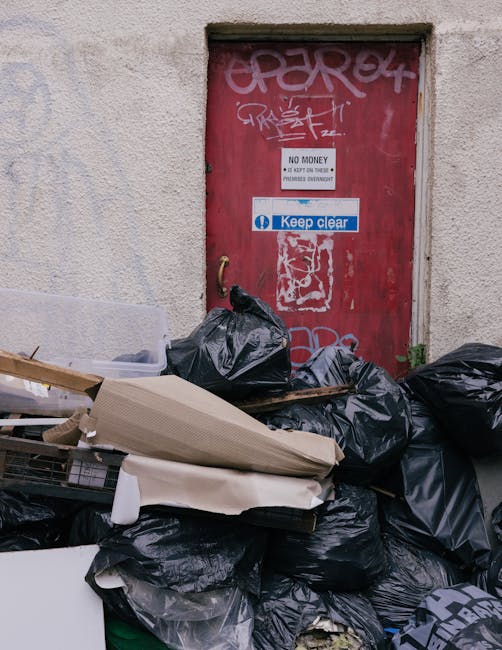
Why hidden rubbish removal fees in Ealing matter
Hidden fees are more than an annoyance. They make it hard to compare providers, they can turn a straightforward job into an awkward conversation, and they often show up when you are already under pressure. Maybe you are moving out, maybe the builder has finished early, or maybe the garden shed has finally given up. In those moments, nobody wants a pricing puzzle.
In Ealing, you will see plenty of different job types: one-off household clearances, builders' waste, garden waste, office furniture removal, and full house clearances. Each one can carry different assumptions about labour, access, waste type, and loading time. A quote that looks good on screen can change once the team arrives at a top-floor flat with narrow stairs and a very full skip-load of mixed items. That is where misunderstandings start.
To be fair, not every extra charge is unfair. Some costs are genuinely caused by the job. The issue is when they are not explained clearly before collection. Good providers will tell you what is included, what could change, and what would trigger a revised price. That transparency is worth paying attention to. If you are still comparing options, the pricing and quotes page is a sensible place to understand how clear quoting should look in practice.
Expert summary: the safest way to avoid surprise charges is to treat every quote as conditional until you have confirmed what is included, what could increase the price, and how the final total is calculated.
How rubbish removal pricing usually works
Most rubbish removal pricing is based on a mix of volume, weight, labour, access, and waste type. That sounds a bit dry, but it is the heart of the matter. If you understand those four or five variables, you are far less likely to get caught out.
Here is the basic logic in plain English:
- Volume: how much space your rubbish takes up in the vehicle or load estimate.
- Weight: heavier materials can cost more because disposal charges and handling effort may be higher.
- Labour: a ground-floor pickup is easier than carrying items from the third floor, especially if there is no lift.
- Access: parking distance, stairs, narrow entrances, and timed loading can affect the job.
- Waste type: mixed household junk, soil, rubble, bulky furniture, or business waste may be priced differently.
This is why "one price fits all" is rarely the best way to buy rubbish removal. If a quote is unusually cheap, it may be missing one of those variables. Not always, but enough to make you ask questions. A reliable provider will usually ask for photos, item counts, or a description before confirming the price.
If you need a broader view of what is typically offered, the services overview gives a useful picture of how different clearance jobs are usually grouped. And if you want to see the practical range of work that can be handled locally, the full service list is a good reference point.
A small but important detail: some companies price by "load size" and others price by time on site. Neither is automatically better. What matters is whether the model is explained clearly and consistently. That clarity makes all the difference when you are trying to compare two similar-looking quotes on a Tuesday afternoon with a bin bag pile in the hallway.
Key benefits and practical advantages
Getting pricing right is not just about saving a few pounds. It affects the whole experience. The best part of clear pricing is that it reduces stress before the job even starts.
- Better budgeting: you know what you are likely to pay before the team arrives.
- Fewer disputes: clear terms reduce the chance of awkward end-of-job price changes.
- Faster decision-making: comparable quotes make it easier to choose a provider.
- Less disruption: no one wants a delayed clearance while prices are being renegotiated at the kerb.
- More trust: transparent pricing usually reflects a more organised operation overall.
There is also a hidden benefit that people often overlook: when prices are clear, you tend to prepare better. You sort items more carefully, separate anything reusable or recyclable, and avoid leaving the team to guess what is included. That can shave time off the job, and time, as you know, is where costs often drift upward.
For households, that might mean less clutter moving from room to room before collection day. For businesses, it might mean less office disruption and a smoother handover. If you are exploring a larger clearance, such as an empty property or a business move, related services like house clearance in Ealing or office clearance support may be more appropriate than a simple one-off collection.
Who this is for and when it makes sense
This advice is for anyone booking waste removal in Ealing who wants certainty rather than guesswork. That includes homeowners, renters, landlords, letting agents, builders, shop managers, and office teams. In practice, hidden charges affect people most when the job is a little messy, a little urgent, or a little bigger than they first expected. Which is often, let's face it, most clearances.
It makes particular sense when:
- you have a lot of mixed waste and are unsure how it will be classified
- the property is upstairs or difficult to access
- you are clearing bulky furniture or heavy items
- you need same-day or short-notice collection
- you are dealing with builders' waste, garden cuttings, or a house clearance
- you want to compare prices across more than one provider
It is also useful if you are in a part of Ealing with parking pressure or limited loading space. A collection in a quiet side street may be straightforward; one near a busier parade can be a different story. If you want local reading around neighbourhood-specific waste concerns, the guide to rubbish removal around Ealing Broadway is helpful context.
And if your job is more specialised, you may be better off matching the service to the waste type from the start. For example, builders' waste disposal in Ealing is not the same thing as garden clearance, and treating them as identical can lead to pricing confusion.
Step-by-step guidance
If you want to avoid hidden rubbish removal fees in Ealing, use a process. Not a perfect one, just a sensible one. Here is a practical way to do it.
- List everything you want removed. Be specific. A "few bits of furniture" is vague. A sofa, mattress, dismantled wardrobe, and four bin bags is much better.
- Take clear photos. Most providers can give a more realistic quote from photos than from a quick phone description. Include access points if they matter.
- Ask what the quote includes. Labour, loading, disposal, congestion considerations, and VAT or other charges should be made clear.
- Ask what could increase the price. This is the big one. You want to know the triggers before anyone turns up.
- Check the waste type. Builders' rubble, soil, and mixed commercial waste may be treated differently from household junk.
- Confirm access details. Floor level, lift access, parking distance, and whether items need dismantling all matter.
- Get the quote in writing. A written summary is not about distrust; it is about reducing misunderstanding.
- Inspect before unloading. If the team says the price needs adjusting, ask them to explain exactly why before the job proceeds.
One thing people sometimes forget: a quote should describe the job, not just the price. A good quote is a mini agreement. If it is just a number with no detail, that is not much of a quote at all. Bit of a red flag, really.
If you are planning a broader clearance, especially after renovation or a move, it can be useful to look at the local service pages for the nearest fit. For example, waste clearance in Ealing may suit general mixed items, while garden waste removal fits outdoor jobs more cleanly.
Expert tips for better results
After enough clearances, certain patterns become obvious. The jobs that go smoothly are not always the smallest jobs. They are the best-prepared ones.
- Be honest about the volume. Underestimating waste almost always causes trouble later.
- Separate obvious categories. Keep garden waste, timber, metal, and household items apart if possible.
- Tell the provider about awkward access early. A narrow staircase or limited parking is not a surprise to hide; it is useful information.
- Ask about disposal method. You do not need a lecture, but you do need to know whether sorting and recycling are included.
- Check if dismantling is extra. Bed frames, wardrobes, and office desks can take time to break down.
- Look beyond the cheapest quote. Cheapest can be fine. Cheapest with vague wording, not so much.
Another practical point: if you are booking at short notice, ask whether same-day availability changes the price. It often can. That does not automatically mean you should avoid it, just that you should understand the premium before you agree.
We also recommend paying attention to how the company talks about recycling and reuse. A provider that explains responsible disposal in plain language tends to be more organised overall. You can see how sustainability is approached locally on the recycling and sustainability page. It is not just a nice extra; it often reflects better working habits behind the scenes.
And yes, ask the slightly awkward question. "Is this definitely the total price?" It saves a lot of nonsense later.

Common mistakes to avoid
The most expensive rubbish removal mistakes are rarely dramatic. They are usually small, ordinary oversights. A missing detail here, a fuzzy assumption there, and suddenly the quote shifts.
- Accepting a phone quote without written detail. If it cannot be referred back to, it is harder to defend later.
- Describing mixed waste too loosely. "A few bags" can mean very different things to different people.
- Forgetting about access constraints. Parking, stairs, lift use, and walking distance are real cost factors.
- Assuming all waste is priced the same. It is not. Heavy waste and specialist waste often cost differently.
- Not asking about minimum charges. Small jobs can still carry a base fee.
- Waiting until collection day to mention extra items. That is when revisions become awkward.
There is also a psychological trap: people sometimes focus on the headline price because it is easy to compare. But the lowest headline can hide the most expensive total. It is like seeing a cheap train fare and then discovering the bag charge, the seat charge, and possibly a charge for breathing. Slight exaggeration, but you get the idea.
If you are moving property or renovating in the area, a bit of wider context can help too. Local guides like how to purchase in Ealing and Ealing real estate investment fundamentals are not about rubbish removal directly, but they show how much planning tends to go into property-related decisions here. Waste removal should be treated with the same care.
Tools, resources and recommendations
You do not need fancy software to avoid hidden fees. A phone, a few photos, and a short written list will do most of the work. Still, a simple system helps.
- Photo set: take wide shots of the pile and close-ups of unusual items.
- Item checklist: note large furniture, white goods, rubble, green waste, and any hazardous or awkward items.
- Access notes: record floor level, parking limitations, and whether loading needs to happen through a rear entrance or alley.
- Quote comparison sheet: compare what each provider includes, not just the final number.
For a well-run local service, it also helps to review company information that shows how they handle basics like payment, insurance, and terms. Those pages are not glamorous, but they matter. You can look at payment and security details, insurance and safety information, and the terms and conditions if you want a clearer sense of how a provider sets expectations.
People also overlook support pages such as about us or the services overview, but those can be useful when you are trying to judge whether a company is straightforward and well organised. Sometimes the simplest signs are the best ones.
Law, compliance and best practice
When rubbish removal is being arranged in the UK, there are a few broad best-practice points that matter. You do not need to become a compliance expert, but you do want to work with a provider that understands responsible waste handling.
Good practice usually means:
- items are collected and disposed of responsibly
- waste is sorted where appropriate rather than all being treated the same
- the provider is clear about what it can and cannot remove
- safety is considered during lifting, loading, and access
- customer terms are transparent enough to reduce disputes
If a quote seems unusually low, ask how disposal is being handled and whether there are any exclusions. That question is not being difficult. It is simply sensible. The same applies to unclear claims about recycling or safety. You want plain language, not vague reassurance.
There can also be practical considerations around waste types that need more care, especially builders' materials, electrical items, or very heavy loads. A reputable provider should be able to say when a job is outside standard collection and may need a different approach. In the local context, that matters because Ealing homes and businesses are a mix of terraces, flats, converted buildings, and commercial spaces. The access challenges vary a lot.
In short: transparent pricing is not just commercial good manners. It is part of good operating practice.
Options and comparison table
It helps to compare the main approaches before you book. The right option depends on the type of waste, the size of the job, and how much certainty you want on price.
| Option | Best for | Possible risk | How to avoid hidden fees |
|---|---|---|---|
| Fixed quote | Jobs where the waste type and access are clear | Price may change if the description was incomplete | Send photos and confirm access details in advance |
| Load-based quote | Mixed waste with an uncertain volume | Estimate can be inaccurate if the pile is compacted or awkward | Ask how the load is measured and what counts as one load |
| Time-based quote | Jobs with variable access or lots of carrying | Costs rise if access is slower than expected | Confirm labour assumptions and parking requirements first |
| Specialist clearance | Builders' waste, garden waste, office clearance, house clearance | Specialist items may be charged separately | Choose the right service from the start |
There is no single winner here. A fixed quote is usually easiest for the customer, but only if the description is accurate. A load-based or time-based price can be fair too, provided the provider explains the rules well. The problem is rarely the method itself. It is the mystery around it.
Case study or real-world example
Picture a typical Saturday morning in Ealing. A family has finally finished clearing out a spare room, and the pile includes a bed base, a wardrobe, a mirror, mixed bags of old bits and pieces, and a broken office chair that somehow survived three moves. They ring for a quote and say, "It's just a few items."
Now, from the customer's point of view, that sounds fair enough. From the provider's point of view, it might mean dismantling, lifting from the first floor, and a longer carry to the vehicle because parking is tight. Suddenly the job is not "just a few items" at all.
In this sort of situation, the best outcome usually comes from a better description rather than a better argument. Photos, access notes, and a list of items would have made the quote more accurate from the start. If the customer had also separated the waste into obvious categories, the collection might have been quicker and cleaner. Simple things. But they matter.
A similar thing happens with garden waste after a busy weekend of pruning. Branches, cuttings, and soil are not priced exactly the same as old furniture, and if the provider does not know what it is, the quote may be too vague to trust. That is why local, job-specific pages such as garden waste in Walpole Park or household waste tips for Northfields can be useful reading before you book.
Practical checklist
Use this checklist before you confirm any rubbish removal booking in Ealing.
- Have I listed every item that needs removing?
- Have I sent clear photos of the waste and access route?
- Do I know whether the quote includes labour, disposal, and loading?
- Have I asked what could trigger an extra charge?
- Have I confirmed the waste type and whether it is specialist or mixed?
- Do I understand any minimum charge or call-out fee?
- Have I checked parking, stairs, lift access, and distance from the road?
- Is the price confirmed in writing?
- Do the provider's terms, payment, safety, and insurance information look clear?
- Have I chosen the right service for the job rather than the nearest-sounding one?
If you can tick most of those off, you are in a much stronger position. Not perfect, maybe, but very much better.
Conclusion
Hidden rubbish removal fees usually appear when the job is described too loosely or the quote is too thin. The fix is straightforward: be specific, ask what is included, confirm what could change the price, and get the details in writing. That alone removes most of the stress.
In Ealing, where properties and access can vary from street to street, the smartest approach is to compare like with like. Look at the full picture, not just the headline number. A clear quote, a sensible service fit, and a provider that explains things properly will usually save you money, time, and a fair bit of hassle.
Get a free quote today and see how much you can save.
And if you take one thing from this guide, let it be this: the best rubbish removal deal is not always the cheapest one. It is the one that turns up as promised, does the job cleanly, and leaves no strange surprises behind. That's the one worth keeping.